

The single biggest stumbling block in a Section 351 ETF conversion is not the tax code. It is the asset list. A portfolio that looks perfectly normal in a brokerage statement can fail at the basket level because of how ETFs actually move securities through creation and redemption.
This guide walks through what can and cannot be contributed in a Section 351 exchange and explains why each category lands where it does. The tax authority comes from IRC Section 351 and Treasury Regulation Section 1.351-1(c). The operational reality comes from how ETFs are built. Both have to align before any asset is accepted.
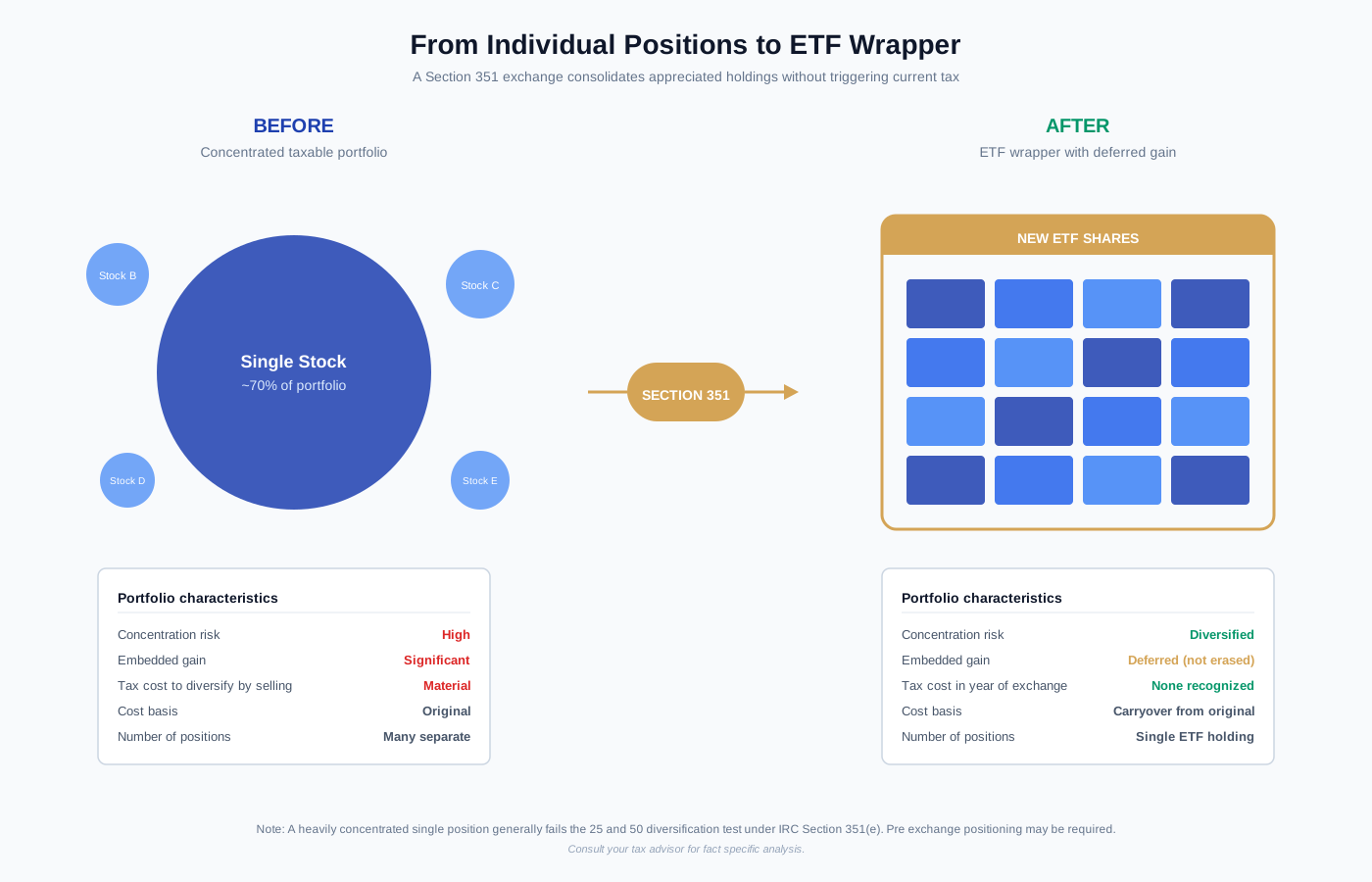
Why eligibility comes down to in kind transfer
ETFs operate through an in kind creation and redemption process. Authorized participants deliver baskets of securities to the fund and receive ETF shares in return, or they deliver ETF shares back and receive securities. This mechanism is what makes ETFs tax efficient and what allows Section 351 contributions to land cleanly inside the wrapper.
If an asset cannot be transferred in kind, it generally cannot be contributed in a Section 351 exchange. The tax rule under IRC Section 351(a) might technically permit the property to qualify as property for stock, but if the operational mechanism cannot accept it, the transaction does not happen.
This is why the eligible assets list looks the way it does. It is not arbitrary. It tracks the underlying mechanics of how ETFs move securities.
Eligible asset categories
The following categories are generally workable in a Section 351 ETF contribution, subject to the diversification and prospectus alignment rules covered later in this guide.
US equities and ADRs
Liquid US listed common stocks and American Depositary Receipts are the cleanest contribution category. They settle predictably, transfer in kind without friction, and carry standard tax lot data through most US custodians.
Over the counter and pink sheet securities are generally not workable. The basket process needs liquid, exchange listed names with normal market depth.
US and foreign stock ETFs
Existing ETFs can be contributed and unwrapped or held inside the new fund. The look through rule applies for diversification testing under Treasury Regulation Section 1.351-1(c), so contributing a concentrated sector ETF does not magically diversify a concentrated portfolio.
Foreign stock ETFs that trade on US exchanges generally work the same way as US ETFs from a contribution standpoint.
Fixed income ETFs
Bond ETFs that align with the receiving fund’s strategy can usually be contributed. A core bond fund can accept core bond ETF positions. A focused equity fund typically cannot accept significant fixed income contributions because they fall outside the prospectus.
Individual bonds are generally harder to contribute because of pricing, lot size, and settlement complications. Each case is fact specific.
Foreign equities and GDRs
Foreign equities can be contributed only when the local market permits in kind transfers and redemptions. Some major markets accommodate this without issue. Others do not, and securities from those markets are effectively blocked.
Markets that frequently present in kind issues include several large emerging markets and a handful of developed markets with restrictive transfer rules. Each foreign holding needs to be checked individually rather than assumed.
Global Depositary Receipts that trade in accessible markets can sometimes be substituted for the underlying foreign shares.
Closed end funds
Publicly traded closed end funds that can be redeemed in kind are generally workable. The look through rule applies, just as with ETFs.
Closed end funds with illiquid underlying holdings, leverage above standard limits, or unusual structures may not fit cleanly. These deserve case by case review.
Commodity ETFs and certain alternative wrappers
Commodity ETFs like broad commodity baskets or single commodity trust products can sometimes be accepted, but only in small allocations and only when they match the receiving fund’s strategy. Operational support for these structures is heavier and the cost can be meaningful.
Spot crypto held through an ETF or trust product
Crypto exposure held through a registered trust or ETF product can sometimes be contributed in small amounts. The receiving fund must be willing and operationally capable. This is a narrow path that requires specific sponsor coordination.
Master limited partnerships
Publicly traded partnerships, including some master limited partnerships, are sometimes accepted. They come with their own tax complications and K-1 reporting issues that need to be reconciled with the fund structure. Consult your tax advisor before assuming any partnership interest will work.
Ineligible asset categories
The following categories are generally blocked from Section 351 ETF contributions. The reasons vary, but the result is the same. The asset cannot move into the fund through the standard process.
Mutual fund shares
Individual mutual fund shares generally cannot be contributed because they are not redeemable in kind. They settle through the mutual fund company on a daily NAV basis, which does not align with the basket transfer mechanism that ETFs use.
This is one of the most common surprises for advisors evaluating client portfolios. A portfolio dominated by mutual funds is typically not a candidate for Section 351 contribution as it stands.
Direct spot cryptocurrency
Direct holdings of spot cryptocurrency, held in a wallet or on an exchange, cannot be contributed to a standard ETF because ETFs are not structured to hold spot crypto directly outside of dedicated grantor trust structures.
The spot crypto trust products are a separate category and may be workable as discussed above.
Restricted stock and RSUs
Restricted stock with transfer limitations, unvested or recently vested restricted stock units, and similar securities generally cannot be contributed because they cannot be redeemed in kind on demand. The transfer restrictions that apply to the holder also apply to any recipient.
If the restrictions have lapsed and the shares trade like ordinary common stock, contribution may be possible, but each case needs review.
Private securities and pre IPO holdings
Private company stock, pre IPO equity, founder shares, and similar holdings are not contribution candidates. They lack a public market, cannot be redeemed in kind, and do not fit the ETF basket process.
Hedge fund interests, private equity, and private credit
Limited partnership interests in private investment vehicles are blocked. They are illiquid by design, often have lock up periods, and do not transfer through public market settlement.
Real estate investment trusts that are not publicly traded
Public REITs that trade on major exchanges can sometimes be accommodated. Non traded REITs, private REITs, and REIT preferred structures with unusual features generally cannot.
Options, futures, and derivatives
Options contracts, futures, swaps, and other derivatives are generally not contribution candidates. They do not behave like stocks or bonds in the basket process and they often have leverage characteristics that the receiving fund cannot absorb.
Foreign securities from restricted markets
Foreign securities from markets that do not permit in kind creations and redemptions are blocked. The list of restrictive markets shifts over time, so each holding needs current verification.
Positions with net unrealized losses
Loss positions are not technically prohibited by the tax code, but contributing them is generally a poor planning decision. Section 351 carries over basis rather than stepping it up. A loss contributed into the fund is a loss the investor can no longer harvest.
The better practice is to harvest losses before any contribution analysis begins. Consult your tax advisor before contributing any position with embedded losses.
A Section 351 exchange contribution must clear two filters. The tax rule under IRC Section 351 must be satisfied, and the asset must be operationally compatible with the ETF in kind process. An asset that fails either filter cannot be contributed.
The prospectus alignment requirement
Even when an asset clears the tax and operational filters, it still must align with the receiving fund’s investment strategy. The prospectus describes what the fund will hold and how it will be managed. The contributed basket has to fit.
A US large cap equity fund cannot accept a portfolio dominated by emerging market debt, even if every individual holding is otherwise eligible. A focused thematic fund cannot accept positions outside its theme. A bond fund cannot accept significant equity exposure.
This is why coordination with the fund sponsor early in the process is critical. The conversation about what fits should happen before client commitments are made.
The diversification overlay
Eligible assets still must produce a diversified portfolio. The 25 and 50 test under IRC Section 351(e) and Treasury Regulation Section 1.351-1(c) requires that no single holding exceeds 25 percent of contributed value and that the top five combined do not exceed 50 percent.
Cash and cash items are excluded from the denominator, so they cannot dilute concentration. Government bonds count as helpful diversifiers. Different share classes of the same issuer are combined as one issuer for the test.
Look through analysis applies to ETFs, mutual funds, and closed end funds in the contributed portfolio. A single ETF that itself holds concentrated positions can pull a contribution offside.
A short eligibility checklist
Before any specific position is presented for contribution, the following questions should be answered.
Is the security publicly traded on a major exchange. Can the security be transferred and redeemed in kind. Does the security fit the receiving fund’s prospectus and strategy. Does the security carry clean lot level basis records. Does the contribution still pass the 25 and 50 test after looking through any wrapper holdings.
When all five answers are yes, the position is generally a candidate. When any answer is no, the position is either blocked or needs additional review. In ambiguous cases, consult your tax advisor before relying on any conclusion.
Frequently asked questions
Are mutual funds eligible for a Section 351 ETF exchange Generally no. Mutual fund shares are not redeemable in kind through the ETF basket mechanism, which is the operational backbone of these transactions.
Can foreign stocks be contributed Sometimes. Foreign equities are eligible only when the local market permits in kind creations and redemptions. Several emerging markets and a handful of developed markets restrict this. Each foreign holding needs to be checked individually.
What about restricted stock or RSUs Generally no. Securities with transfer restrictions cannot be redeemed in kind, which blocks them from the ETF basket process. If restrictions have fully lapsed, the shares may sometimes be treated as ordinary common stock.
Can a client contribute spot Bitcoin or Ethereum directly Direct spot crypto cannot be contributed to a standard ETF. Crypto exposure held through a registered trust or ETF product may sometimes be accepted in small allocations.
Do existing ETFs in the contributed portfolio cause problems They can. The diversification look through rule under Treasury Regulation Section 1.351-1(c) examines the underlying holdings of contributed funds, so a concentrated wrapper does not solve a concentration problem.
Should appreciated and depreciated positions both be contributed Generally not. Section 351 carries over basis, so loss positions contributed into the fund cannot be harvested. The better practice is to harvest losses before contribution and contribute primarily appreciated positions. Consult your tax advisor for your specific situation.
Conclusion
The Section 351 exchange eligible assets list is shorter than many investors expect, and the reasons trace back to how ETFs actually move securities. The tax rule under IRC Section 351 is permissive on its face, but the in kind transfer mechanism, the prospectus alignment requirement, and the diversification overlay narrow the field considerably.
The right starting point is a position level review of the client portfolio against the categories above. Anything in the eligible list moves to operational review. Anything in the ineligible list is either removed from the contribution or, in a few cases, restructured before contribution. When in doubt, consult your tax advisor before treating any conclusion as final.